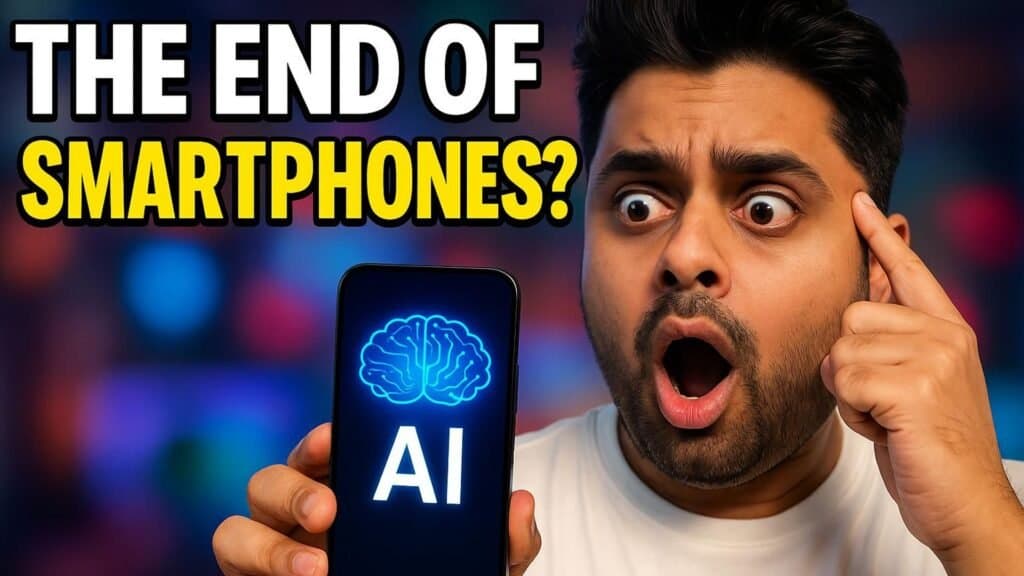
I Explored the Future of Smartphones: Is AI Signaling Their End?
Key Takeaways:
- AI is transforming user interactions, potentially rendering traditional apps obsolete.
- Industry leaders predict a shift towards AI-driven, intent-based computing.
- While smartphones may not disappear immediately, their role is evolving rapidly.
As someone deeply immersed in the tech world, I’ve been closely monitoring the rapid advancements in artificial intelligence (AI) and their impact on our daily devices. The question that’s been looming large is: Are we witnessing the beginning of the end for smartphones as we know them?
The Rise of AI and the Decline of Traditional Apps
At the 2026 South by Southwest (SXSW) conference, Carl Pei, CEO of Nothing, made a bold prediction: the era of app-based smartphone experiences is nearing its end. He envisions a future where AI agents become the primary interface, eliminating the need for individual apps. Instead of navigating through a cluttered home screen, users would simply express their intentions, and intelligent AI systems would autonomously handle tasks like booking rides or sending messages. ([techcrunch.com](https://techcrunch.com/2026/03/18/nothing-ceo-carl-pei-says-smartphone-apps-will-disappear-as-ai-agents-take-their-place/?utm_source=openai))
This shift from app-centric to intent-centric computing suggests a significant transformation in how we interact with technology. The traditional app icons, home screens, and app stores could be replaced by seamless, AI-powered systems that prioritize outcomes over interfaces.
Industry Leaders Weigh In
Panos Panay, Amazon’s head of devices and services, echoes this sentiment. He believes that the familiar ritual of unlocking a phone and scrolling through apps is approaching its final chapter. Panay predicts that the next generation of technology users will move away from screen-centric experiences, driven by fatigue with social media and the rapid rise of generative AI. ([moneycontrol.com](https://www.moneycontrol.com/technology/amazon-s-alexa-chief-says-the-smartphone-app-era-is-ending-as-ambient-intelligence-takes-over-article-13750935.html?utm_source=openai))
This perspective is further supported by the emergence of AI-driven devices that aim to provide more intuitive and efficient user experiences. For instance, companies are exploring AI-enabled devices that can process tasks without connecting to a server, potentially reshaping user behavior and changing how apps and services are consumed. ([ericsson.com](https://www.ericsson.com/49ed78/assets/local/reports-papers/mobility-report/documents/2024/ericsson-mobility-report-june-2024.pdf?utm_source=openai))
The Evolution of User Interfaces
The evolution of user interfaces has been remarkable. From command lines to graphical user interfaces (GUIs), and then to touchscreens, each transition has aimed to make technology more accessible and user-friendly. Now, with the advent of AI, we’re on the cusp of another significant shift. AI assistants are poised to carry out cross-app tasks through voice commands, reducing the need for manual navigation and making interactions more seamless. ([computerworld.com](https://www.computerworld.com/article/3996035/will-ai-be-the-new-ui.html?utm_source=openai))
Pros & Cons
| Pros | Cons |
|---|---|
| Streamlined user experience with AI handling tasks autonomously. | Potential privacy concerns with AI accessing personal data. |
| Reduction in screen time and app fatigue. | Dependence on AI may lead to reduced user control. |
| More intuitive interactions based on user intent. | Transition period may cause confusion among users. |
Is It Worth It?
While smartphones are unlikely to disappear overnight, their role is undeniably evolving. The integration of AI into our devices promises a future where interactions are more intuitive and efficient. However, this transition also raises questions about privacy, user control, and the learning curve associated with new technologies.
As we stand at this technological crossroads, it’s essential to stay informed and adaptable. The future of smartphones may not be set in stone, but one thing is clear: AI is set to play a pivotal role in shaping it.
What are your thoughts on this shift? Are you ready to embrace an AI-driven future, or do you have reservations about leaving traditional smartphones behind? Share your perspectives in the comments below.
Comments
Loading comments...